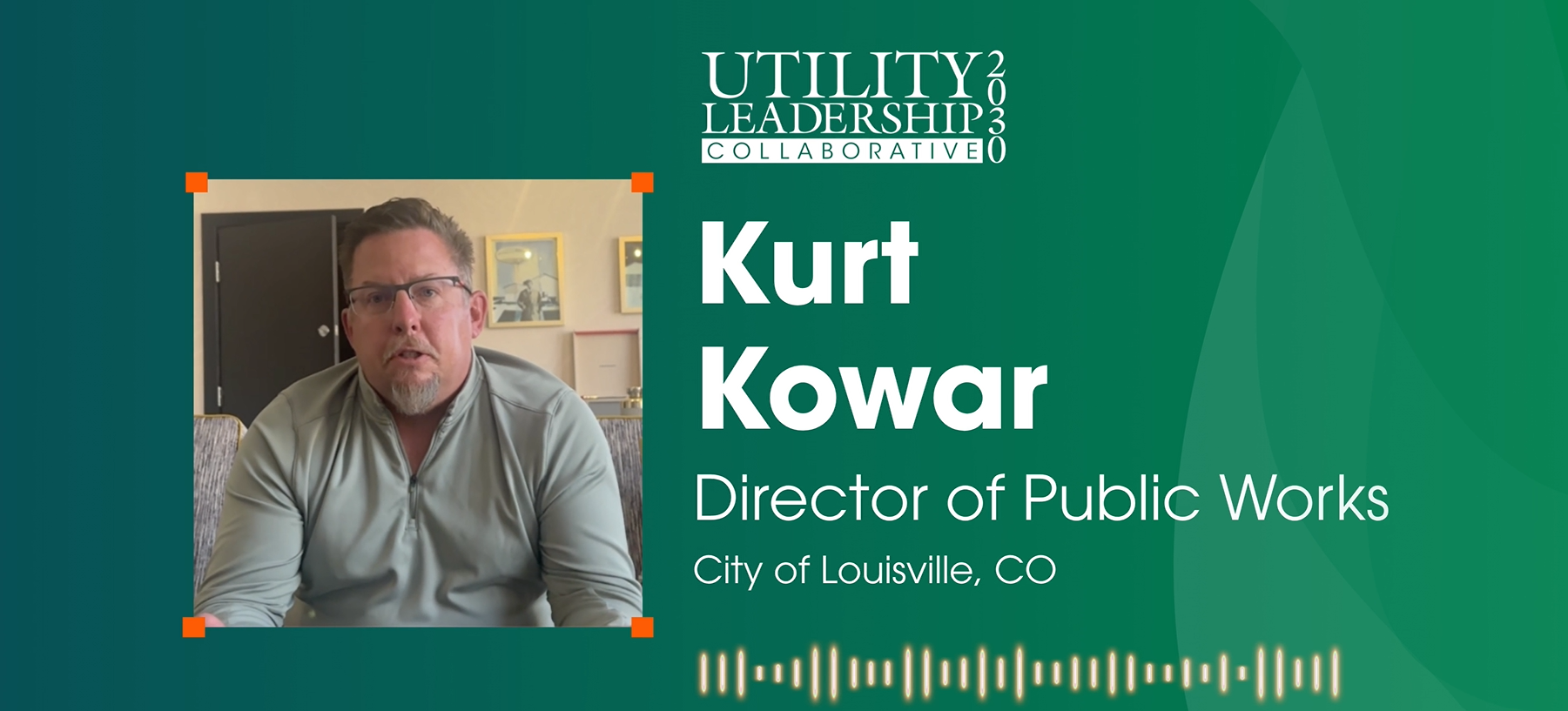
In December of 2021, the Marshall Fire broke out near Boulder, CO. The neighboring suburb of Louisville, a town of 21,000 people, was hit hard by the fire. About 500 homes in the community burned. Kurt Kowar, director of Public Works for the City of Louisville, described some of the challenges in responding to and recovering from the fire in a recent UNFILTERED interview with Utility 2030.
“It was overwhelming. It was one of the first urban conflagrations. We had to learn about how a fire impacts a water utility system, and there wasn’t a lot of science out there at the time of our fire. We didn’t understand what contaminants we were up against or how to get rid of them.”
Fortunately, City of Louisville was able to work with and learn from scientists at universities like Purdue and Oregon State as well as other communities that had been through fires like Paradise and Santa Rosa.
And after his firsthand experience with the Marhsall Fires, Kurt was able to “pay it forward” by sharing knowledge and experience with utilities in other communities facing wildfires like Maui and the Palisades. In working with other utilities, he realized that there was a lack of a centralized system or protocol for recovering a utility system after a fire.
So, Kurt used AI to create the FireSense.Academy website to create a resource and knowledge base for other utilities facing wildfires. The site includes resources like tools for preparing briefings with boards or councils, learning about wildfire risk assessment, working with different city departments, and more.
He emphasizes that the website was created with AI, but is not AI itself, and at this point, he does not suggest using AI for desion making in any disaster situation.
Kurt hopes he can continue to pay forward the help Louisville received through Firesense.Academy and that other utilities can use it as a playbook for various pieces of wildfire response and recovery.
“We go so much help in Louisville, it allowed our community to recover fast, and now we want to help other people recover their communities fast.”