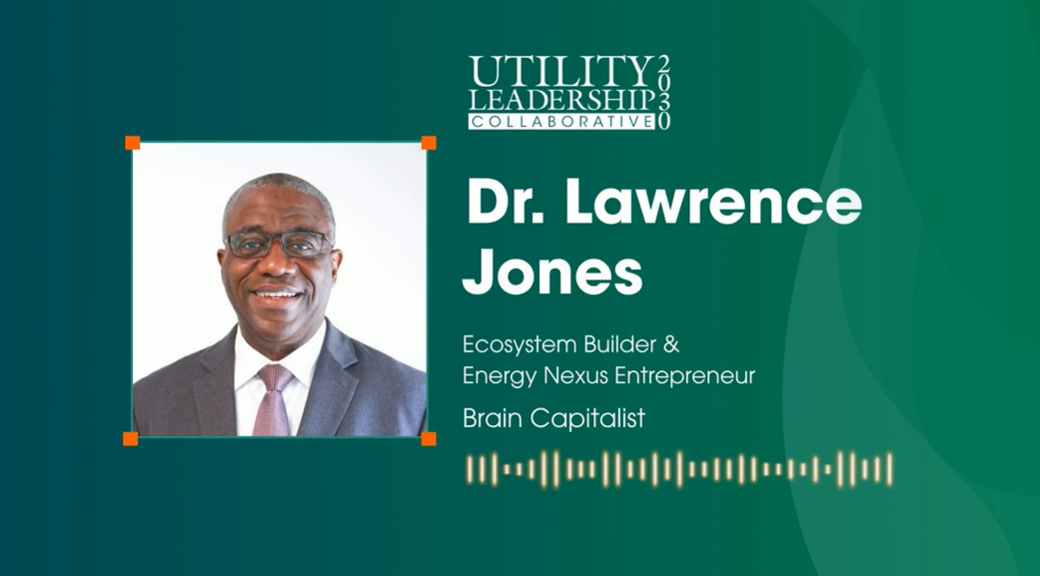
When he took the stage at SPARK, Utility 2030’s Annual Meeting, Dr. Lawrence Jones asked the audience to take out our phones. He then directed us to turn them off and put them away for the duration of his 30-minute talk. He explained that out of sight is not out of mind – unless your phone is actually turned off, part of your brain will still be focused on the phone, waiting for notifications. When it’s off, you know there are no notifications coming until you turn it back on, and you give that part of your brain a rest.
The constant focus on the phone running in the background of our minds is causing brain burnout, Dr. Jones argued. It’s deteriorating our brain health, which in turn affects how we work. And as more and more tasks are done with AI, brain health and the ability to think creatively and critically across disciplines becomes increasingly important.
Dr. Jones and his partner Michael J. Southworth refer to the overall cognitive, emotional, and social capacity of the brain as “brain capital.” They posit that brain capital is a critical asset that companies should track, measure, and invest in, and that it is the highest area of ROI for an organization. Investment in brain capital means investment in creativity, empathy, and resilience – attributes typically thought of as soft skills, but that Dr. Jones believes are really hard skills, as they take time to develop and maintain.
“Introspection, retrospection, all these different kinds of thinking are things that will help the brain in its evolution. But if you never have the chance to pause, to reflect, to think, to question, then you’re losing an important brain skill, which is the ability to create context, to learn from context,” he says.
For more of his UNFILTERED point of view on how companies should approach brain capital, watch this week’s Utility 2030 UNFILTERED with Dr. Jones.