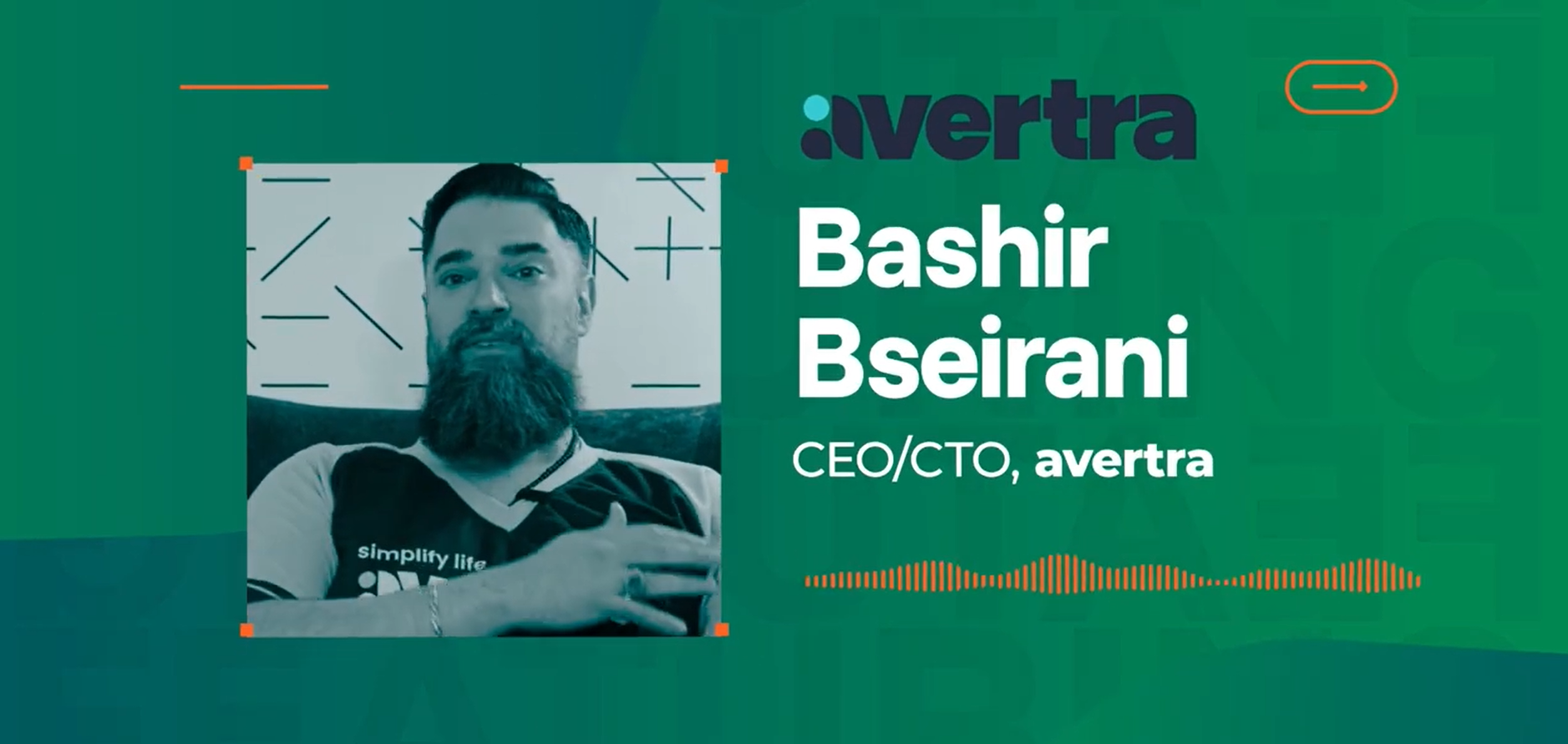
The Utility 2030 Leadership Collaborative (U2030) recently sat down with Bashir Bseirani, CEO/CTO of avertra, for the first interview of our new program, U2030 UNFILTERED. UNFILTERED is a short-form, experience-based point-of-view program featuring interviews that deliver clear, real-world insights from utility leaders and other experts on the issues shaping the industry.
Bashir has a warning for utility leaders rushing to implement AI: the speed you’re celebrating is the drug you’re addicted to.
What does he mean by that?
“Leaders are now taking AI in like a drug,” he says. The addiction is the speed of outputs, and to the instant gratification that comes with it, even when that speed compromises quality, accuracy, and the longevity of the work.
Fast is a measure of speed. Good is a measure of judgment. AI implementations fail when leaders mistake one for the other. By the time the consequences become visible, the organization has optimized for efficiency instead of effectiveness, and the voices most likely to spot the risk have already been pushed aside for not moving fast enough.
As CEO/CTO of avertra, Bashir sits at the center of how AI and emerging technologies are being brought into the complex world of utilities and other customer-centric industries, where speed, accuracy, and change management are not luxuries but operating fundamentals. That vantage point gives him a unique perspective on the technology.
The Real Work: Understanding Your Own Motives & Team
Most AI initiatives skip straight to implementation. Bashir argues that the questions leaders should answer first are:
- Is the team ready?
- Is the vision achievable?
- What change management is required to make it stick?
- What’s the actual “why”?
- Is this the right team to carry it forward?
Answering these questions is the majority of work, with the last one being the most difficult because AI changes what a team is fundamentally built to do.
The shift, as he describes it, is from hands on keyboard to eyes on output. The job shifts from creating to validating, which means the fastest AI adopter isn’t always the most valuable contributor. Often, the person moving more slowly is doing the harder work: questioning assumptions, testing conclusions, and refusing to trust an answer simply because it arrived instantly.
The real risk around AI is a lack of skepticism; treating an output as finished work instead of something that still requires human judgment. Skepticism shows a level of critical thinking and willingness to shift skillsets. It’s the team members who blindly accept AI and its outputs who might need to be replaced.
Bashir takes the frame one step further: AI itself should be treated as a team member. “You have to onboard it, you have to do performance reviews for it, you have to tweak it and train it just like you train a human, and you have to fire it if it’s not doing a good job.”
Why This Matters More in Utilities
Bashir knows that utilities don’t have the risk tolerance of consumer tech. Decisions touch infrastructure, regulators, and customers who can’t switch providers. Inaccuracies have real consequences.
New flashy tools cannot overwrite industry disciplines and regulatory obligations overnight. The tools have to be intelligently shaped and built to honor those disciplines while challenging process traditions to put communities at the heart of the work. That’s what separates an innovation worth investing in from an expensive experiment in the lab.
—
U2030 UNFILTERED is sharing insights from leaders for leaders. And we want to hear from you. To share your thoughts with us or to be connected with our UNFILTERED expert, email us at info@utility2030.org.
What questions about AI do you think leaders should be asking that they are not yet?